MOA Workshop Agenda
Half-day workshop for Measuring and Optimizing Heterogeneous AI Architectures at MICRO 2026
Time: November 1, 2026, 1:00 PM – 5:00 PM
Venue: Omikron I, InterContinental Athenaeum Athens, Greece
For the workshop abstract, topics of interest, and organizers, please see the Workshop Overview.
Technical Sessions
Open AI Benchmarking and Community-Driven Evaluation
About the speaker
Tom St. John
Member of Technical Staff, Gimlet Labs
Tom St. John is a member of technical staff at Gimlet Labs where he focuses on heterogeneous disaggregation and performance optimization for cutting-edge AI workloads. Prior to his current role, he served as the technical lead for MTIA training performance at Meta and led the distributed machine learning performance optimization efforts within Tesla Autopilot. His research primarily focuses on the intersection of parallel programming models and computer architecture design, and the impact that this has on high-performance and efficient machine learning. He completed his M.S. and Ph.D. at the University of Delaware and B.S. at Rutgers University. His work has resulted in a number of patents and publications, including several best paper awards.
Abstract
With global investment in AI infrastructure reaching unprecedented scale, objective and peer-reviewed performance evaluation is essential for guiding architectural design and procurement. MLPerf has established itself as the definitive scoreboard for machine learning systems, bridging the gap between raw silicon capability and production workload performance. This talk provides an inside look at the design principles behind the MLPerf benchmark suites and examines some of our newer efforts, such as MLPerf Endpoints and MLPerf Power.
MPI to Megakernels: Data Movement and Measurement in Accelerated Systems
About the speaker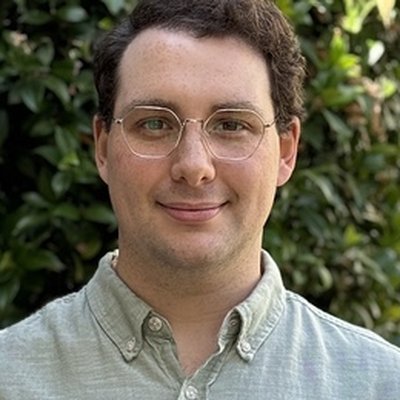
Benjamin Glick
Senior Software Engineer, NVIDIA
Benjamin Glick is a Senior Software Engineer on the GPU Communications team at NVIDIA, where he works on NVSHMEM and NCCL. His work focuses on making multi-GPU systems more performant, programmable, and usable particularly through GPU-initiated communication over NVLink and RDMA.
Abstract
GPU-accelerated systems have grown heterogeneous at every level within the SM, across the GPU, within the node, across the rack and across the system. Over the same period, the number of agents that move data has grown from the CPU alone to include copy engines, SMs, the Tensor Memory Accelerator (TMA), GPU-initiated network operations and in-switch reduction, and data movement is increasingly started from inside the kernel rather than by the host. This talk follows one workload, a GEMM followed by a cross-rank reduction, through five generations of NVIDIA hardware and software from 2006 to the present. For each generation it identifies the new data movers, the measurement tools available and what those tools could not observe. Finer-grained parallelism requires finer-grained performance measurement, and so measurements have moved inward, from library interposition to stream timelines to in-kernel instrumentation, and each step costs more overhead and requires more hardware-specific knowledge. Despite recent progress in in-kernel tracing and multi-GPU profiling, correlating events across devices, attributing link contention, and observing in-network computation remain open problems.
Helion: A Kernel DSL for Heterogeneous Hardware with Agentic Compiler Hill-Climbing
About the speaker
Jongsok Choi
Engineering Manager, Meta Superintelligence Labs
Jongsok Choi is an Engineering Manager at Meta Superintelligence Labs, where he leads the teams building TorchInductor, the compiler optimization stack behind torch.compile, and Helion, a Python-embedded DSL for performance portable ML kernels. He also works on TPUs and its software frameworks. He represents Helion on the PyTorch Foundation's Technical Advisory Council and is an active contributor to the project, with work on its LLM-guided autotuner and its TPU and CuTe DSL backends. He has 15+ years of experience in building compilers for hardware acceleration. During his Ph.D. at the University of Toronto, he helped build an open-source, LLVM-based high-level synthesis compiler that turns software into hardware accelerators. He then co-founded LegUp Computing to commercialize that research, which was later acquired by Microchip Technology. Jongsok has co-authored 17 papers and is an inventor of seven U.S. patents.
Abstract
Every AI accelerator has its own architecture, memory hierarchy, and often its own kernel language, so reaching peak performance has meant rewriting and re-tuning kernels for every new chip. Helion, is an open-source Python domain-specific language (often called "PyTorch with tiles") that lets you write a kernel once and leave the hardware-specific tuning to the compiler. The compiler derives a search space of tile sizes, loop orders, pipelining, and more from the kernel itself; the autotuner then searches that space to find a performant implementation on the target hardware.
Helion can compile one source to many hardware backends, and this talk presents two new ones. On Google TPU, the Pallas backend produces attention kernels that outperform Google's optimized Tokamax library. On NVIDIA Blackwell, the CuTe DSL backend matches or outperforms the best of cuDNN, FlashAttention 4, and FlexAttention across 29 attention variants.
Much of Helion's compiler is built by AI agents. Rather than tuning individual kernels, agents hill-climb the compiler itself, turning each trade-off they find into an autotuner knob instead of a fixed heuristic, so every performance win is amortized across many kernels. We demonstrate how this agentic hill-climbing of the compiler brings state-of-the-art performance to Helion.
Programming Furiosa RNGD
About the speaker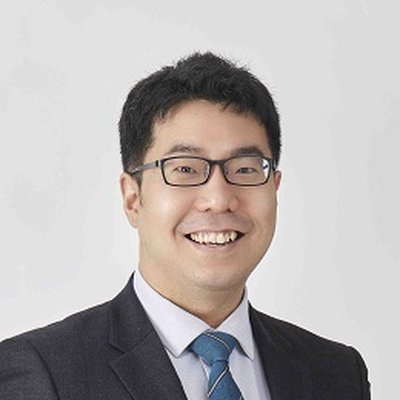
Jeehoon Kang
Chief Research Officer, FuriosaAI
Dr. Jeehoon Kang is the Chief Research Officer (CRO) at FuriosaAI. Before joining the industry, he was an Associate Professor of Computer Science at KAIST after receiving his Ph.D. under the supervision of Prof. Chung-Kil Hur at Seoul National University. As a specialist in concurrency, compilers, and software verification, he has published over 30 papers in premier venues such as MICRO, ASPLOS, SOSP, and PLDI.
At FuriosaAI, Dr. Kang applies his academic expertise in computer systems to solve engineering challenges in industrial-scale deployment. He leads the development of kernel programming models to maximize the performance of the RNGD accelerator, alongside building the application software stack for reinforcement learning and agentic AI.
Abstract
AI agents are becoming kernel authors. RNGD programming must expose tensor intent and resource use to the compiler, then return correctness and execution cost to the author. RNGD Virtual ISA (vISA) expresses tensor semantics, mapping, data movement, and engine use. The furiosa-opt toolchain checks and lowers that program, then surfaces diagnostics, schedules, correctness results, and runtime profiles.
Two RNGD case studies show programmability in practice. The NPU Model Optimization Competition gives external developers a path to build and evaluate kernels. In an internal Mistral-Nemo-12B study, an AI agent iteratively optimized kernels and the serving engine using compiler and runtime feedback, bringing performance close to the modeled attainable ceiling.
AI-MicroBMT: Deployment-Aware Benchmarking of Commercial Edge AI Accelerator Stacks
About the speaker
Boryoung Kim
Ph.D. Student, Seoul National University
Boryoung Kim is a Ph.D. student in the Department of Electrical and Computer Engineering at Seoul National University, researching on-device AI and NPU benchmarking. She has been involved in AI-BMT from the beginning and is now developing SDV-BMT, an SDV-specific version of AI-BMT.
Abstract
Edge-AI accelerator performance depends on the complete deployment stack—including model conversion, quantization, compiler, runtime, host, and execution scenario—rather than accelerator specifications alone. We present AI-MicroBMT, a deployment-aware benchmarking framework for characterizing versioned edge-AI accelerator stacks. AI-MicroBMT keeps dataset validation, query generation, task-metric computation, and result logging common across backends, while a thin Hardware Abstraction Layer (HAL) confines vendor-specific conversion, preprocessing, and inference with output adaptation. The framework evaluates feasibility before performance and separately measures latency-oriented Single-Stream execution, throughput-oriented Offline execution, and requested finite-N concurrency scaling. We evaluate six non-CPU accelerator stacks and an Apple M4 CPU reference using 2,440 measurements across 67 classification variants, activation and resolution sweeps, fixed-N workloads, and 20 YOLO-family detection models. The results show that compilation success does not ensure a useful deployment, that Single-Stream and Offline measurements can select different leading stacks, and that Offline throughput does not predict finite-request concurrency scaling. Our platform is available at https://www.ai-bmt.com.
Workshop Program
November 1, 2026 | 1:00 PM – 5:00 PM
| Time | Session |
|---|---|
13:00 – 13:10 | Opening Remarks |
13:10 – 13:35 | Tom St. John (Gimlet Labs) Open AI Benchmarking and Community-Driven Evaluation |
13:35 – 14:00 | Benjamin Glick (NVIDIA) MPI to Megakernels: Data Movement and Measurement in Accelerated Systems |
14:00 – 14:25 | Jongsok Choi (Meta) Helion: A Kernel DSL for Heterogeneous Hardware with Agentic Compiler Hill-Climbing |
14:25 – 14:40 | Coffee Break |
14:40 – 14:50 | Competition Overview Overview of the competition, benchmark and evaluation methodology |
14:50 – 15:15 | Jeehoon Kang (FuriosaAI) Programming Furiosa RNGD |
15:15 – 15:40 | Boryoung Kim (Seoul National University) AI-MicroBMT: Deployment-Aware Benchmarking of Commercial Edge AI Accelerator Stacks |
15:40 – 15:50 | Leaderboard Presentation |
15:50 – 16:00 | Finalist Talk: 1st Place Winning optimization techniques and performance analysis on the FuriosaAI platform |
16:00 – 16:10 | Finalist Talk: 2nd Place Winning optimization techniques and performance analysis on the FuriosaAI platform |
16:10 – 16:20 | Finalist Talk: 3rd Place Winning optimization techniques and performance analysis on the FuriosaAI platform |
16:20 – 16:35 | Awards Ceremony & Group Photo |
16:35 – 17:00 | Closing Discussion Future directions for AI benchmarking and heterogeneous AI architectures Industry–academia collaboration |
NPU Model Optimization Competition
A distinguishing feature of MOA is a practical benchmarking and optimization competition powered by the AI-BMT platform (https://www.ai-bmt.com/) and organized in collaboration with FuriosaAI (https://furiosa.ai/).
Participants benchmark and optimize modern AI workloads using the FuriosaAI virtual ISA (vISA) stack and execute workloads on remotely accessible RNGD AI accelerator systems. The competition combines benchmarking methodology with hands-on optimization, enabling participants to evaluate runtime behavior and quantify optimization effectiveness on production AI hardware.
https://micro2026-moa.github.io/
Target Model: Gemma4-12B
Google DeepMind's open-weight multimodal model
Supports text, image, audio, and video inputs
High memory efficiency and strong local inference performance
Optimization Targets
Kernel scheduling
Memory access optimization
Operator fusion
Tensor layout transformation
Compiler-assisted lowering and mapping
The session will feature finalist presentations together with invited technical talks on benchmarking methodologies and optimization techniques for modern AI accelerator systems.